Black Houseplants for People Who Think Green Is Overrated: 15 Gothic Picks
Every „black” plant you have ever bought online looked more like a photo filter than a leaf. It arrived, sat under your regular lamp, and turned into a muddy green-purple thing that resembled nothing on the product page. That gap between expectation and reality is the single biggest complaint around black houseplants, and it usually has nothing to do with the seller lying to you.
Here’s the part most lists skip: dark pigmentation in these plants is driven by light. The plants that look truly black in showroom photos are usually sitting in bright, direct sun. Put the same plant in a dim corner and it drifts back toward plain green within a few weeks.
This list is organized by how demanding that darkness actually is to maintain, from forgiving gothic houseplants to rare specialty finds worth hunting down.
The best black houseplants for most people are ZZ Plant ‘Raven’, Tradescantia ‘Purple Heart’, and Philodendron ‘Black Cardinal’, since all three hold their dark color reliably and tolerate average home conditions. Truly demanding options like Alocasia ‘Black Velvet’ and Schismatoglottis ‘Black Ghost’ need high humidity and are better suited to experienced growers. Most black houseplants need bright, indirect light to stay dark, not shade.
Dark Plants That Forgive You for Forgetting Them
These five are the entry point into black houseplants. They tolerate missed waterings, average light, and the general chaos of a normal week, which makes them the smartest first purchase if you’re new to gothic houseplants.
1. ZZ Plant ‘Raven’
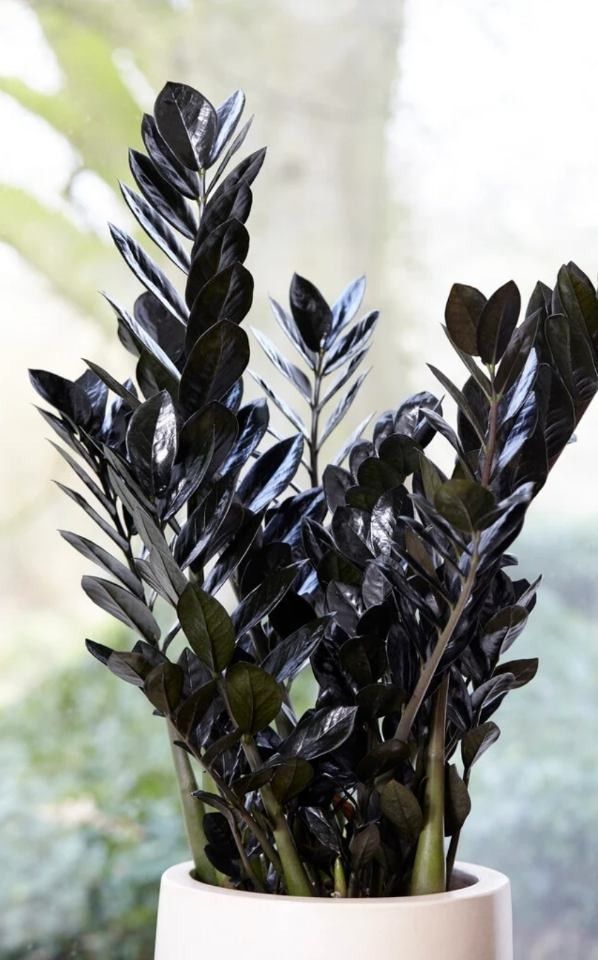
New leaves come in bright green and slowly mature into a deep, near-black purple-green with a glossy, structural shine. It’s one of the most forgiving black houseplants sold today, tolerating low light and irregular watering without complaint. The trade-off: fresh growth and recently repotted plants look distractingly green for weeks before darkening.
Best for: low-light rooms and offices · Difficulty: Easy
2. Colocasia esculenta ‘Black Coral’
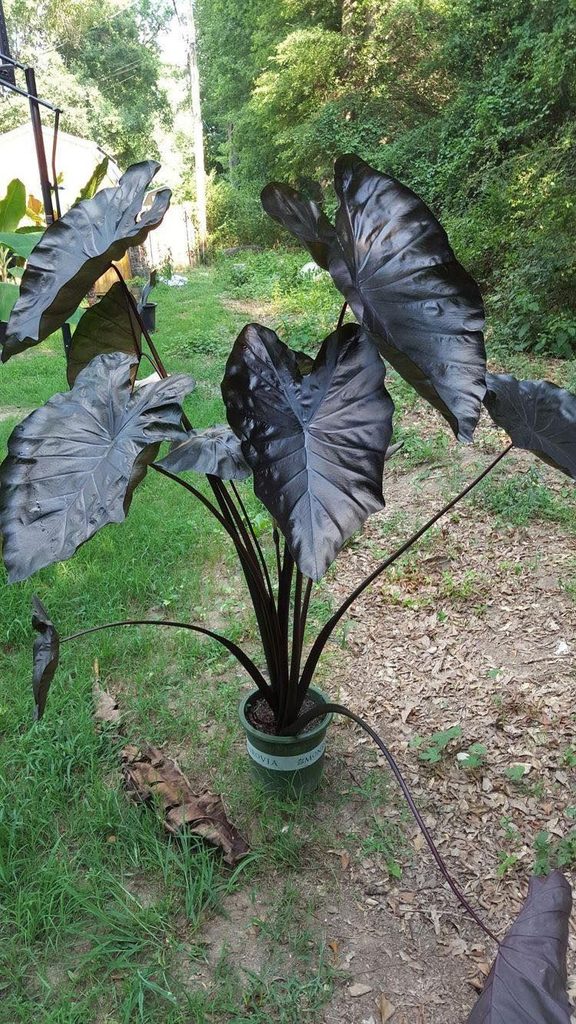
Enormous elephant-ear leaves in a matte, almost velvety blackish-purple make this a genuine statement plant. It wants high humidity and bright light to hold that color, and it may go dormant seasonally. Give it a humid bathroom corner and it rewards you with real drama.
Best for: humid corners and bold statement spots · Difficulty: Medium
Shop Colocasia esculenta ‘Black Coral’
3. Tradescantia zebrina ‘Purple Heart’
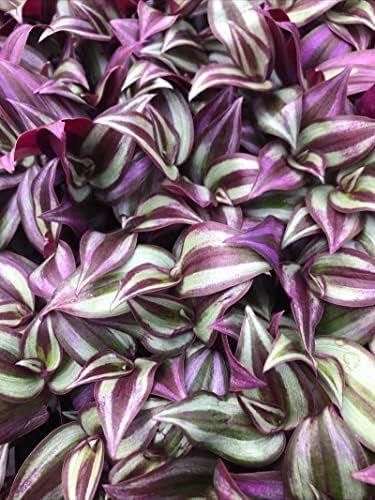
A fast, trailing plant with deep violet-black foliage that practically begs to spill out of a hanging basket. It roots easily from cuttings, which makes it one of the easiest black leaf plants to multiply for free. Keep it in bright light or it fades toward green, and pinch it back so it doesn’t get leggy.
Best for: hanging baskets and quick propagation projects · Difficulty: Easy
Shop Tradescantia ‘Purple Heart’ on Amazon
4. Peperomia caperata ‘Black Ripple’
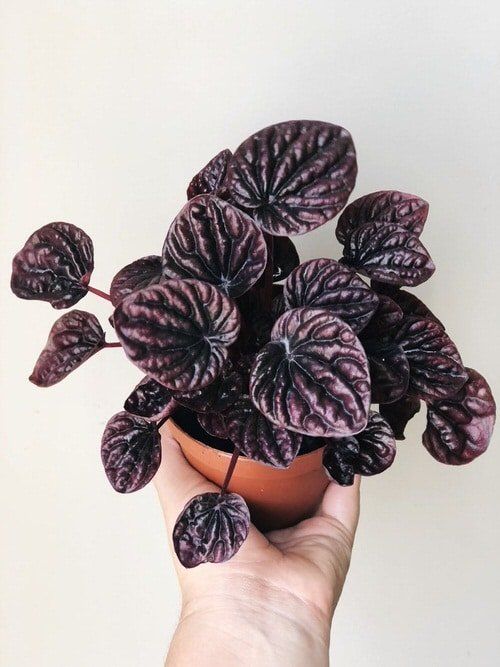
Small, deeply crinkled, near-black leaves give this compact plant a lot of texture for very little space. It grows slowly and stays tidy on a desk or narrow shelf. Its semi-succulent roots rot quickly if overwatered, so err on the dry side.
Best for: desks, shelves, and terrariums · Difficulty: Easy
5. Aeonium arboreum ‘Zwartkop’
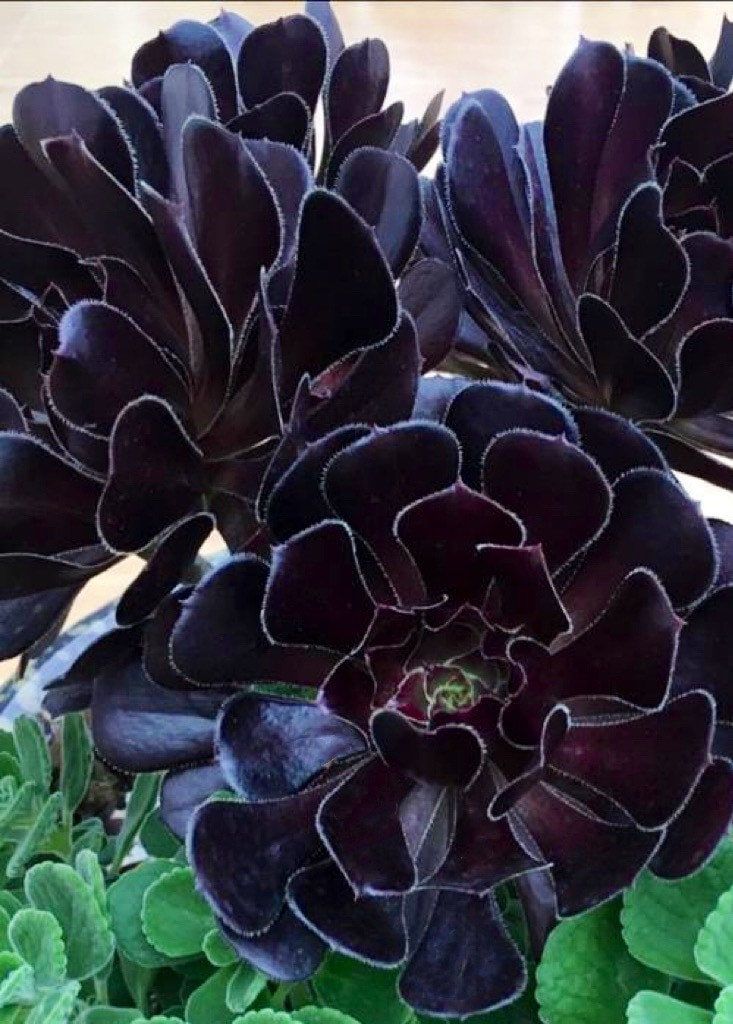
This succulent forms rosettes so dark and glossy they look almost lacquered, giving instant gothic houseplant credibility. It needs excellent drainage and strong, direct light, since indoor growers often watch it stretch and pale without enough sun. A sunny windowsill is non-negotiable here.
Best for: sunny windowsills and succulent collections · Difficulty: Medium
The Plants That Do the Heavy Gothic Lifting
This middle tier trades a bit of ease for a lot more visual payoff. None of these are impossible, but each one asks for something specific in return for staying dark.
6. Alocasia ‘Black Velvet’
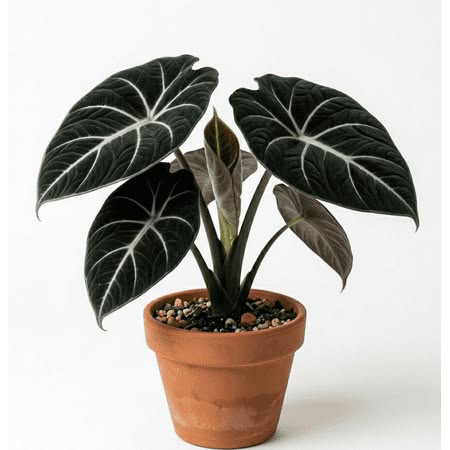
Small, intensely velvety near-black leaves with pale veining make this the most photographed of all black houseplants, and for good reason. It’s genuinely fussy, wanting humidity above 60% and punishing both under- and overwatering with visible sulking. Treat it like a humidity-loving specialty plant, not a windowsill decoration.
Best for: humid bathrooms and enclosed terrariums · Difficulty: Medium-Hard
7. Philodendron ‘Black Cardinal’
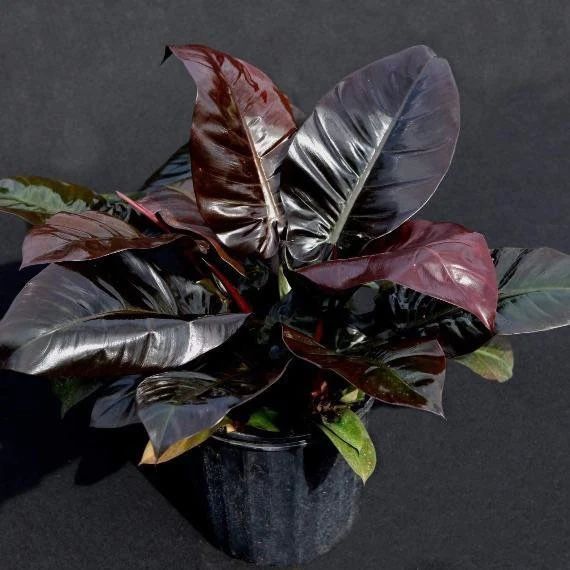
New leaves unfurl deep burgundy-red and mature into a rich, near-black burgundy with a glossy finish. It grows upright and looks bold on a shelf or floor stand. Keep it away from cold drafts and windows, since chilly air causes leaf drop fast.
Best for: intermediate collectors wanting a bold shelf plant · Difficulty: Medium
Shop Philodendron ‘Black Cardinal’
8. Begonia ‘Black Fang’
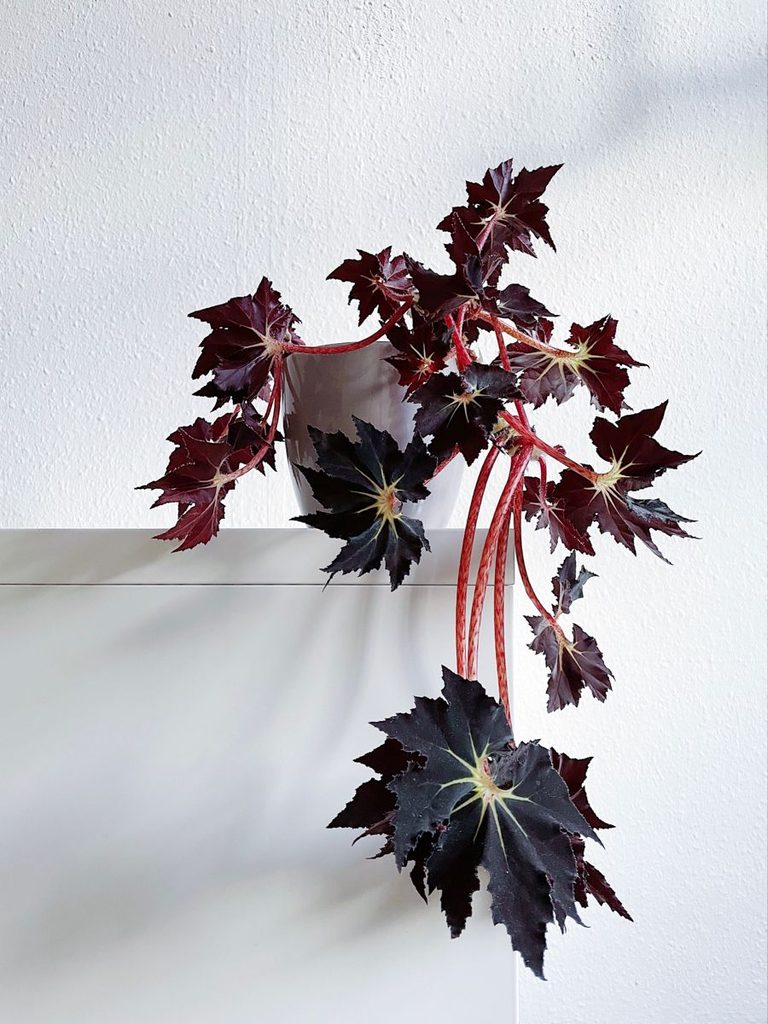
Jagged, fang-shaped near-black leaves with a metallic sheen make this rex begonia unusually textural. It’s sensitive to both overwatering and dry air, and edges crisp up quickly when humidity drops. A humidity dome or enclosed terrarium solves most of its complaints.
Best for: terrariums and humidity domes · Difficulty: Medium
9. Colocasia ‘Black Magic’
Large, glossy, matte-purple-black elephant-ear leaves give this a bolder, more upright silhouette than ‘Black Coral’. It wants bright light and steady moisture, and it will droop and yellow visibly the moment either slips. Consistency matters more than perfection here.
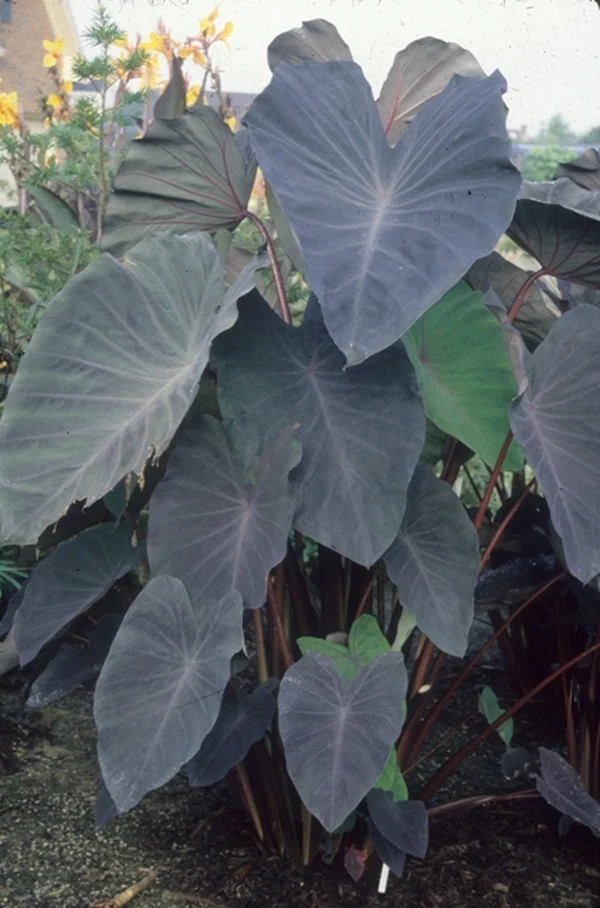
Best for: bold statement corners · Difficulty: Medium
10. Ficus elastica ‘Burgundy’ / ‘Black Prince’
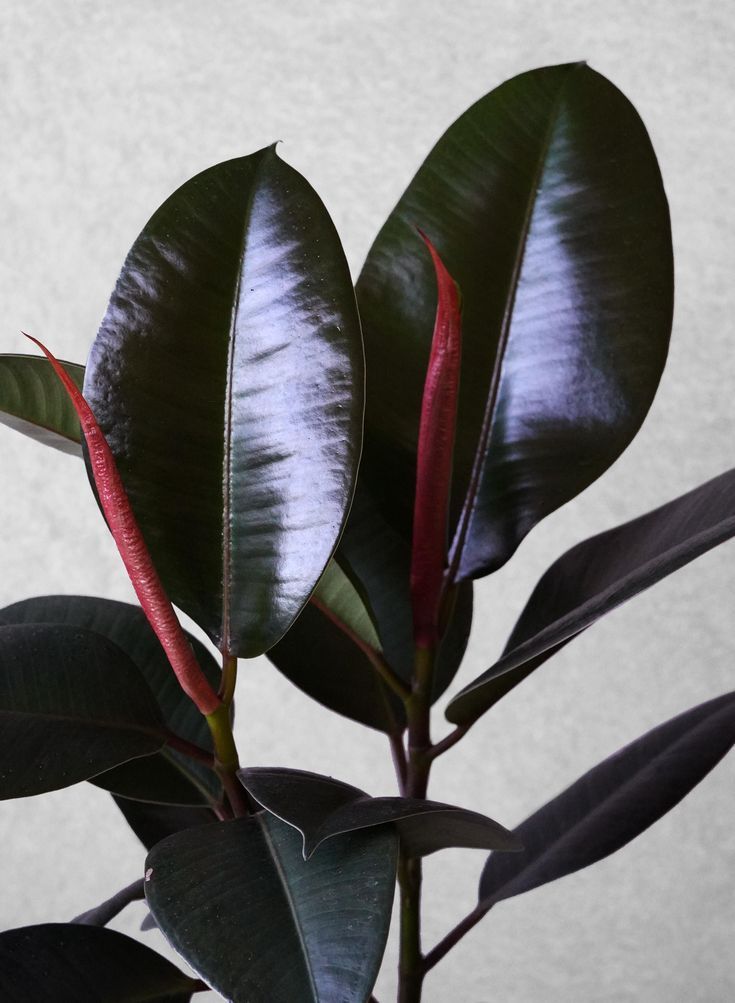
Thick, glossy, deep burgundy-to-near-black leaves grow on a tree-like upright form that eventually reads as furniture. It’s long-lived and sculptural, but sensitive to overwatering and sudden light changes, both of which trigger leaf drop. Once it’s settled, it asks for very little.
Best for: a living-room floor plant that grows for years · Difficulty: Medium
Shop Ficus elastica ‘Burgundy’
Rare Finds for the Plant Person Who Wants a Conversation Piece
These five are for readers who’ve already mastered the easier gothic houseplants and want something less common. Expect higher prices, less forgiving care, and a lot more compliments.
11. Alocasia macrorrhizos ‘Black Magic’
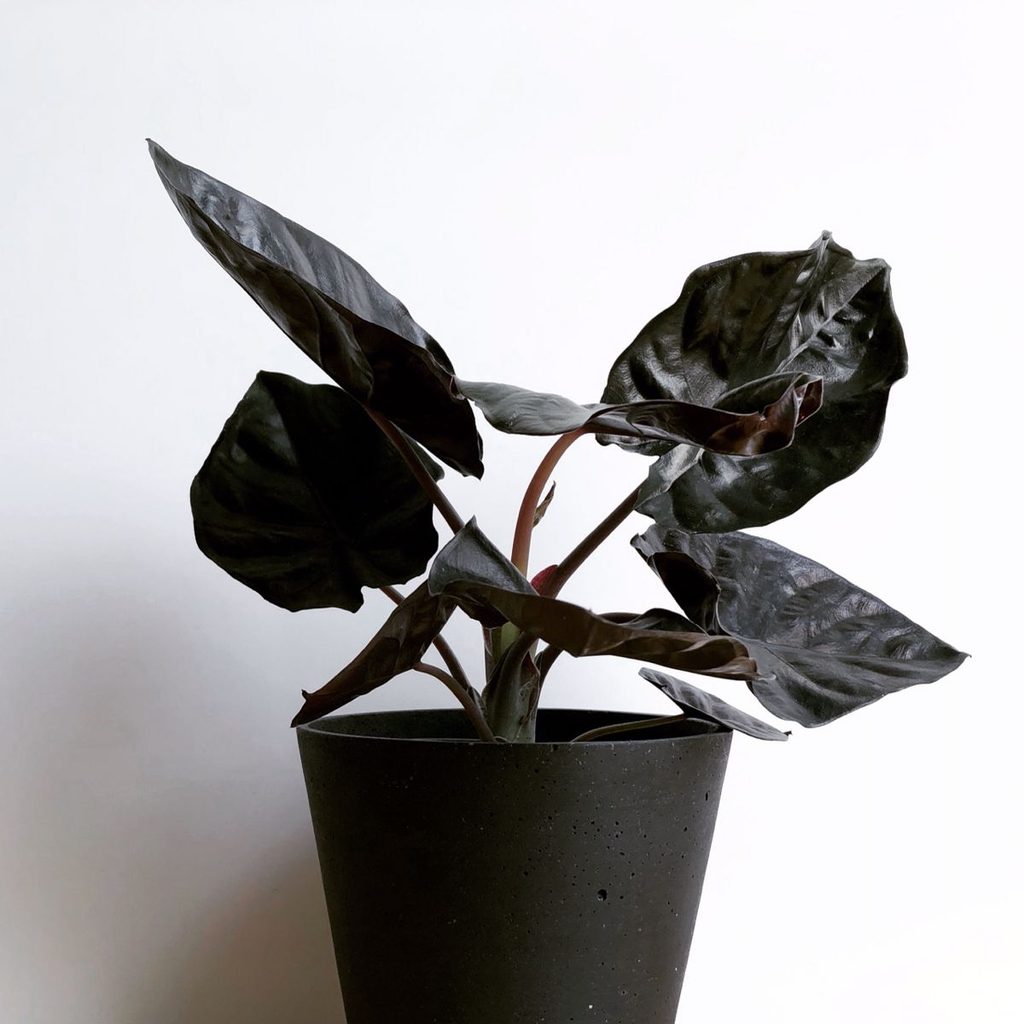
Distinct from the Colocasia of the same name, this Alocasia is much larger and more upright, with broad glossy near-black leaves on long petioles. Given bright, indirect light, it can reach several feet indoors. It needs real floor space, not a tabletop spot.
Best for: larger rooms and collectors wanting scale · Difficulty: Medium-Hard
12. Schismatoglottis ‘Black Ghost’
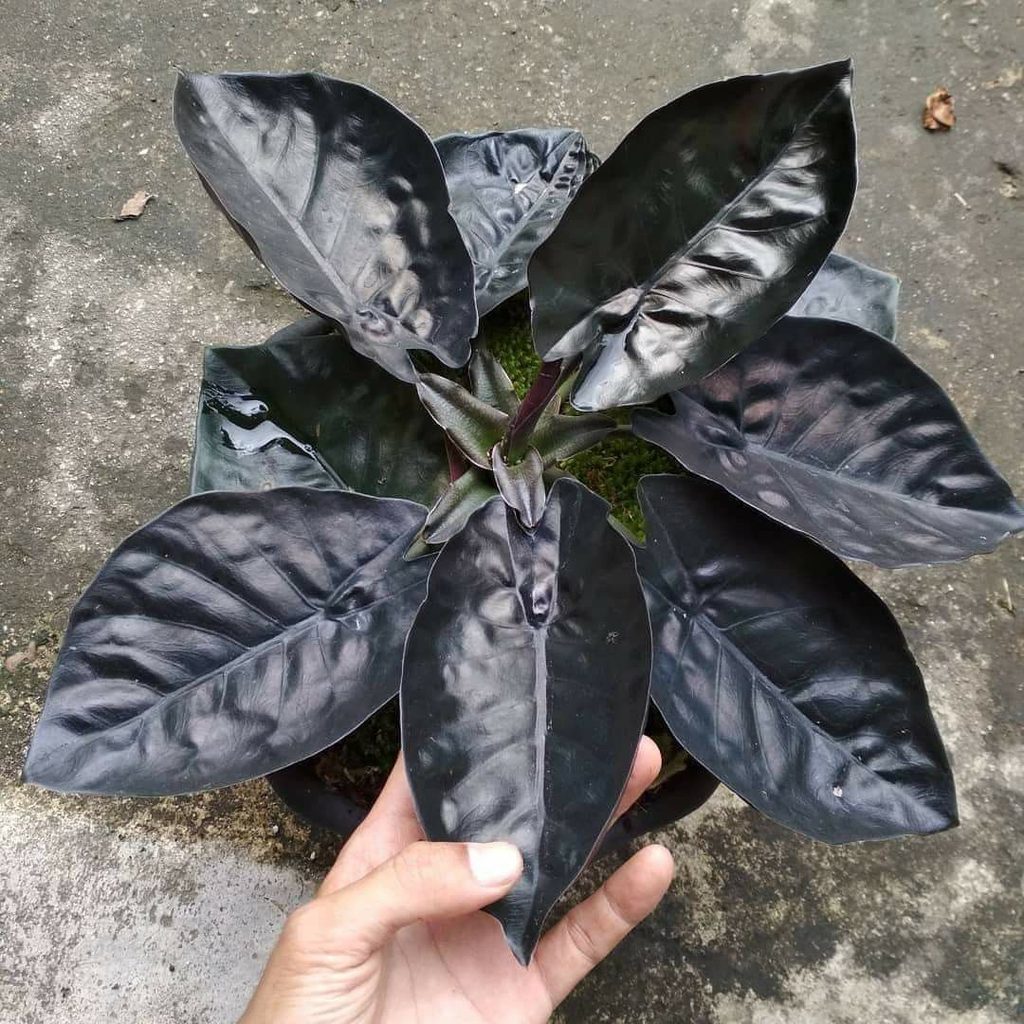
A genuinely rare aroid with matte near-black leaves veined in pale ghostly lines, prized among specialty collectors. It’s expensive and often hard to source, and it demands high, terrarium-level humidity. This is the plant to hunt down once you’ve proven you can keep the easier ones alive.
Best for: serious collectors and terrarium builds · Difficulty: Hard
Shop Schismatoglottis ‘Black Ghost’
13. Cordyline fruticosa ‘Black Magic’
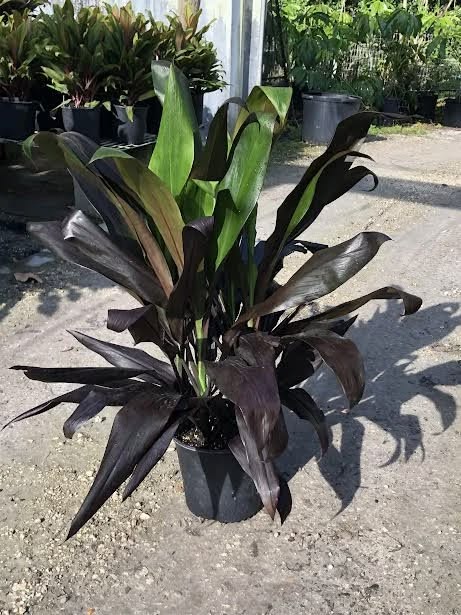
Strappy, glossy, near-black-maroon leaves radiate from a central stalk, adding vertical, spiky texture that reads instantly gothic. It’s sensitive to fluoride and chlorine in tap water, which browns leaf tips over time. Filtered or rainwater keeps it looking sharp.
Best for: height and texture on a mixed plant shelf · Difficulty: Medium
Shop Cordyline fruticosa ‘Black Magic’
14. Aeonium ‘Cyclops’
A larger-headed relative of ‘Zwartkop’, with wide, chocolate-black rosettes on thick, tree-like stems. It shares the same sun and drainage demands as other Aeoniums, and indoor growers often struggle to match the color intensity it reaches outdoors. Give it the brightest spot in the house.
Best for: succulent collectors wanting more scale · Difficulty: Medium
15. Oxalis triangularis
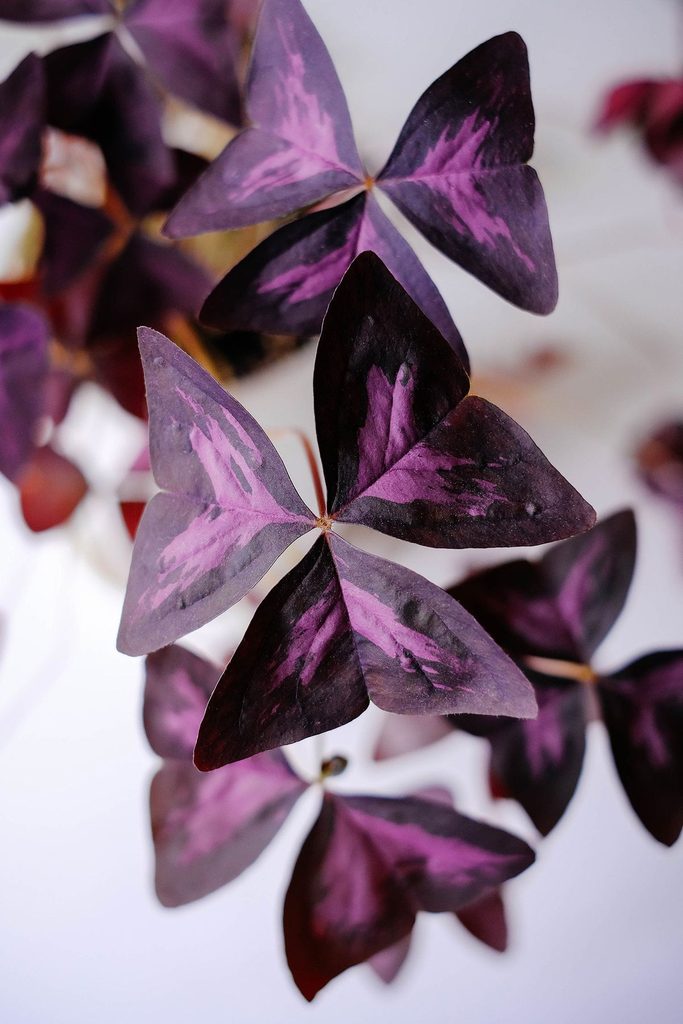
Triangular, butterfly-shaped leaves in deep purple-black fold up at night and open with delicate pink-white flowers by day. It goes through natural dormancy where leaves die back, which new owners often mistake for the plant dying. Give it a rest period and it returns on its own.
Best for: windowsills and plants with visible daily movement · Difficulty: Easy
Why Your Black Plant Keeps Turning Green
This is the single most common complaint with black houseplants, and it isn’t a defect. Dark pigmentation in these plants is produced in response to strong light, so a plant kept in a dim room simply produces less of it.
The fix is almost always more light, not less, which contradicts what a lot of shade-loving-plant advice implies. Move a fading Purple Heart or Zwartkop closer to an unobstructed window and new growth usually comes back darker within a few weeks.
- Move the plant to the brightest spot that doesn’t scorch the leaves
- Compare new growth to older leaves, since color change shows up gradually
- Rule out overwatering, which also dulls leaf color
- Be patient with recently repotted plants, since new roots take priority over pigment
If a plant still looks green after a light increase, check that you actually bought the cultivar you intended. Several sellers use „black” loosely to describe deep purple or maroon plants that were never going to be true black.
Styling a Gothic Plant Shelf Without It Looking Cluttered
Black houseplants photograph beautifully in isolation but can turn muddy when crowded together against a dark wall. Contrast is what makes them read as intentional rather than accidental.
Pair deep-leaved plants with lighter pots, pale stone, or metallic containers so the foliage has something to stand out against. A single Alocasia ‘Black Velvet’ in a white ceramic pot reads as curated; five dark plants in five dark pots reads as a shadow.
Height variation matters too. Mix a trailing Purple Heart with an upright Cordyline and a low rosette of Aeonium so the eye has somewhere to travel.
If your space also needs to feel restful rather than purely dramatic, it’s worth looking at calming indoor plants to balance the moodier picks with something softer nearby.
Halloween Styling Without the Kitsch
Black houseplants make genuinely convincing halloween plant decor without a single plastic skull in sight. A cluster of Colocasia ‘Black Magic’ beside candlelight does more work than seasonal clutter ever could.
Keep the styling restrained. One or two dramatic plants against a plain backdrop reads as intentional design; ten small dark plants scattered everywhere reads as a display table.
Rotate lighting through the darker months. A grow light nearby keeps color intact even as natural daylight shortens, which matters more for these plants than for typical green houseplants.
If pets share the space, double-check placement before assuming safety. It’s worth cross-referencing something like the pet-friendly houseplants guide before setting a new dark plant somewhere curious paws can reach.
What Beginners Get Wrong First
The most common mistake is buying the fussiest plant on the list first. Alocasia ‘Black Velvet’ and Schismatoglottis ‘Black Ghost’ are stunning, but they’re a rough introduction to black houseplants if you’ve never grown anything before.
The second mistake is assuming „black” means „shade-tolerant.” Most of these plants need brighter conditions than typical houseplants, not dimmer ones.
The third mistake is watering on a fixed schedule instead of checking the soil. Colocasia and Alocasia want consistent moisture; Aeoniums and Peperomias want to dry out between waterings, and mixing up the two kills more plants than neglect ever does.
Start with one or two easy plants, get a feel for your home’s actual light levels, then expand toward the showpiece and rare tiers as confidence builds.
Choosing the Right Dark Plant for Your Space
Match the plant to your actual conditions rather than the mood board. A north-facing apartment with modest light suits ZZ ‘Raven’ or Peperomia ‘Black Ripple’ far better than a sun-hungry Aeonium.
- Bright, direct sun: Aeonium ‘Zwartkop’, Aeonium ‘Cyclops’
- Bright, indirect light: Philodendron ‘Black Cardinal’, Ficus ‘Burgundy’, Cordyline ‘Black Magic’
- High humidity spaces: Alocasia ‘Black Velvet’, Begonia ‘Black Fang’, Schismatoglottis ‘Black Ghost’
- Low to medium light, forgiving schedules: ZZ ‘Raven’, Peperomia ‘Black Ripple’
Budget matters too. Easy black leaf plants like Tradescantia and Oxalis cost little and propagate freely, while rare aroids carry collector prices that reflect their limited availability. If your main goal is a calmer, less demanding plant collection overall, the mood-boosting houseplant guide is a useful companion list alongside these darker picks.
FAQ about black houseplants
Are black houseplants actually black, or just dark purple?
Most so-called black houseplants are deep purple, maroon, or near-black green rather than true black. Plants like Aeonium ‘Zwartkop’ and Philodendron ‘Black Cardinal’ get close to true black in strong light, while others like Oxalis triangularis are more accurately deep purple.
Why did my black houseplant turn green?
Low light is almost always the cause, since dark pigmentation in these plants develops in response to strong light exposure. Moving the plant to a brighter spot usually brings the color back in new growth within a few weeks.
What are the easiest black houseplants for beginners?
ZZ Plant ‘Raven’, Tradescantia ‘Purple Heart’, Peperomia ‘Black Ripple’, and Oxalis triangularis are the most forgiving easy black plants for beginners. They tolerate average home light and irregular watering better than the showier collector varieties.
Do black houseplants need different care than green houseplants?
The main difference is light, since most black houseplants need brighter conditions to hold their color rather than less. Otherwise, watering and humidity needs vary by species just as they do among green plants.
Which black houseplants work well for halloween plant decor?
Colocasia ‘Black Magic’, Alocasia ‘Black Velvet’, and Cordyline ‘Black Magic’ all make dramatic seasonal statements without looking like costume props. Keeping the styling to one or two standout plants against a plain background reads far more intentional than a crowded display.
Black houseplants reward patience more than perfection. Start with one forgiving pick, pay attention to how your light actually behaves through the day, and let the color develop on its own timeline. Once you see how directly brightness affects depth of color, choosing and placing the rest of this list gets a lot easier, and a lot less disappointing.