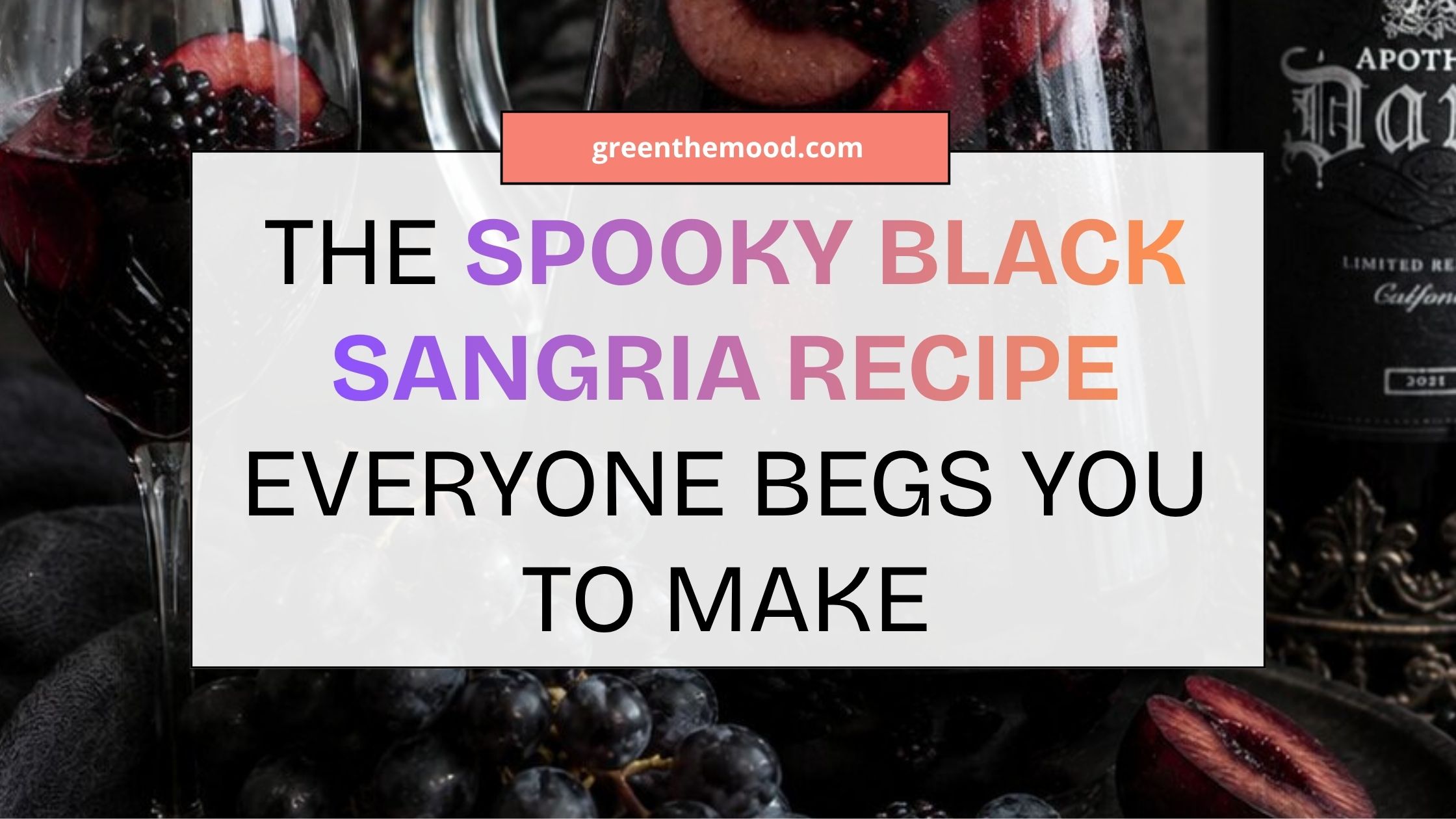
The SPOOKY Black Sangria Recipe Everyone Begs You To Make
You are standing in the wine aisle, or maybe at your own kitchen counter the night before the party, holding a bottle of red wine in one hand and a tiny bottle of liquid food coloring in the other. You remember exactly how this went last time. Muddy plum. Dusty mauve. Definitely not black.
Here’s the thing nobody tells you: a good black sangria recipe is not a garnish problem. It’s not about tossing a plastic spider on the rim and calling it Halloween. It’s a build-order problem, a wine-choice problem, a „what does black actually mean in a glass of liquid” problem.
Get the technique right and you get something genuinely inky, dramatic, and photographable. Get it wrong and you get gray sludge with fruit floating in it. This is the version that actually works.
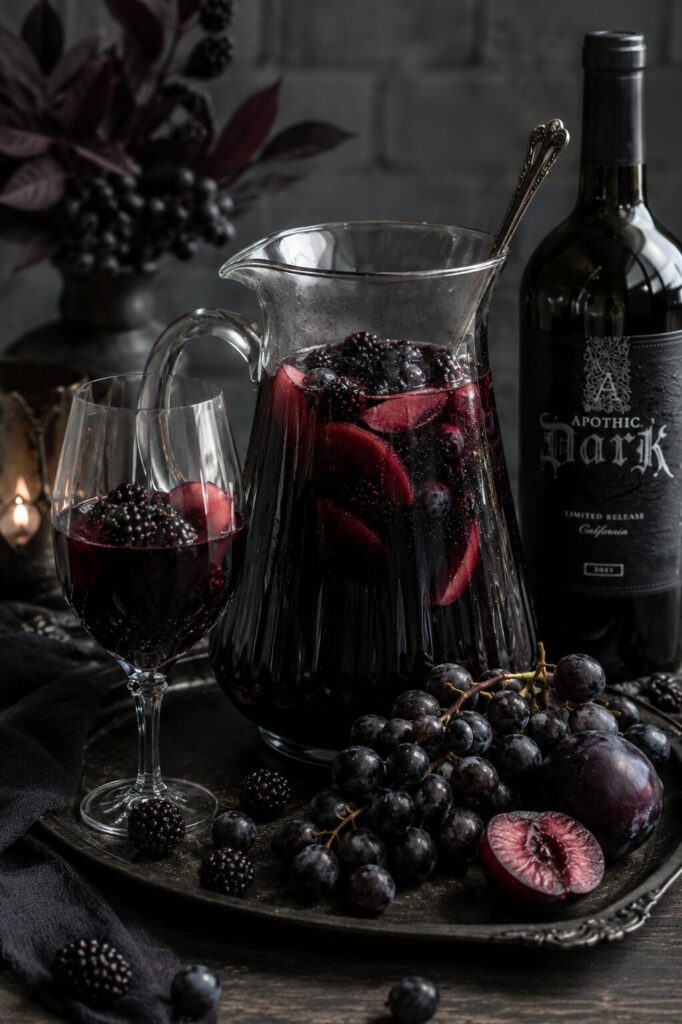
A black sangria recipe gets its color from a dry, deeply pigmented red wine combined with dark fruit like blackberries or black grapes, plus a small amount of black food gel or activated charcoal if needed, and a black-hued liqueur. Macerate the fruit first, add wine and liqueur, then top with soda just before serving so the color stays inky instead of fading gray.
What Actually Makes a Drink Look Black
Black in a cocktail is a layered effect, not a single ingredient you dump in at the end. It’s built in stages, the same way a dark paint color is built from several pigments working together instead of one can of black.
Start with the wine. A light, fruity red like Pinot Noir is already working against you before you add anything else, because its natural color sits closer to garnet than to ink. A dry red with deep, dense pigment — Cabernet Sauvignon or Malbec are common go-tos for this kind of depth — gives you a much shorter distance to travel toward true black.
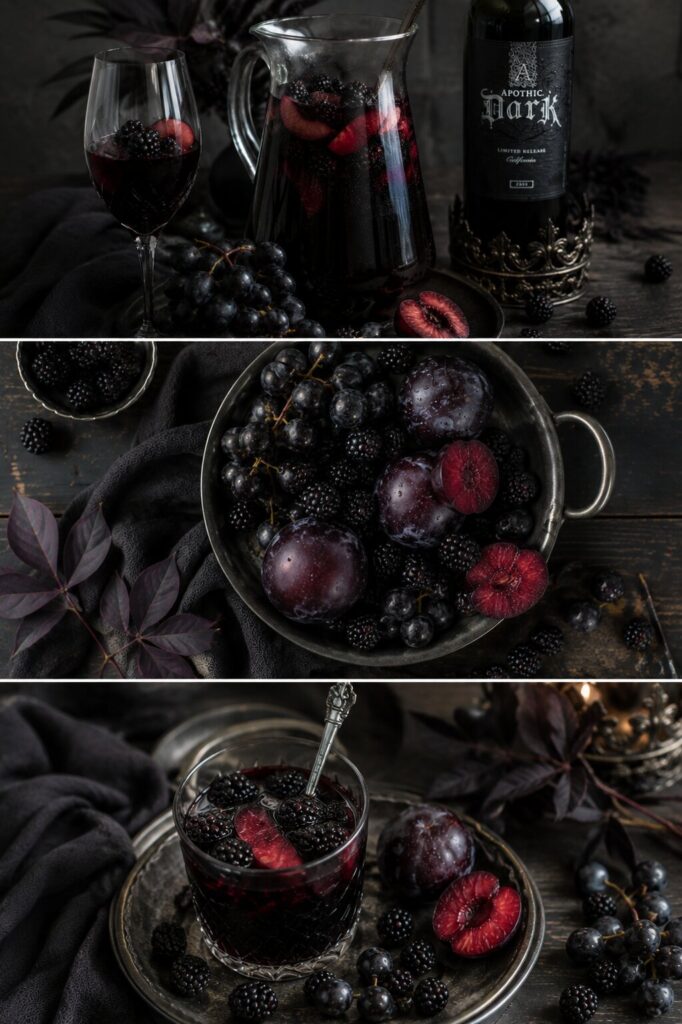
Dark fruit does double duty here. Blackberries, black grapes, and dark cherries stain the liquid as they sit, adding real color without relying entirely on dye. This is also why a spooky sangria recipe built around fruit tends to taste better than one built around coloring alone — you’re adding flavor and color in the same step.
- Dry, deeply colored red wine as the base
- Dark fruit macerated ahead of time for natural staining
- Gel or paste food coloring, used sparingly, if you need more depth
- Optional activated charcoal for hosts who want maximum black
- Soda or topper added last, never early
The mistake most recipes make is treating color correction as a last-minute fix — squeezing food coloring drops into a finished pitcher. That’s exactly how you end up with the dusty rose failure mode instead of the black wine punch you were picturing.
The Ingredient List Explained Choice by Choice
Every ingredient here should be earning its place for color, flavor, or ideally both. This isn’t a five-specialty-item shopping trip. It’s a normal grocery run plus maybe one liquor store stop.
The wine is non-negotiable in terms of depth. Buying a light, cheap red because it’s on sale undermines the entire point of a black sangria recipe before you’ve even opened the bottle. Spend the extra two or three dollars on something genuinely dark.
A black or dark berry liqueur adds concentrated color plus flavor — blackberry liqueur is the easiest to find, and some black sambuca-style products work similarly . This is optional but genuinely useful if you want depth without over-relying on coloring.
- Must-have: dry, deep-colored red wine (one bottle per 4–5 guests)
- Must-have: blackberries, black grapes, or dark cherries for maceration
- Must-have: simple syrup for sweetness without muddying color
- Nice-to-have: blackberry or black-hued liqueur
- Nice-to-have: black food gel (not liquid drops) for final correction
The topper is where the real trade-off lives. Soda water keeps the color cleanest. Cola or another dark soda deepens flavor but pulls the visual toward brown-black rather than true black — a trade worth naming plainly rather than pretending one option wins outright.
The Exact Method Step by Step
Order of operations is what separates an inky black wine punch from a gray one. Skipping steps or doing them out of sequence is the single most common way this goes wrong.
Work backward from your party start time. If people arrive at 7pm, you want fruit macerating by 3 or 4pm, wine added an hour later, and soda added at the very last minute before guests walk in.
- Halve or slice your dark fruit and add it to the liqueur in your pitcher; let it macerate 30 minutes to 2 hours
- Pour in the wine and stir gently to combine
- Taste, then add simple syrup gradually until balanced
- If color isn’t dark enough, dip a toothpick into black food gel and stir it in a tiny amount at a time
- Refrigerate the base until 15–20 minutes before serving
- Add soda water or ginger beer right before guests arrive, not earlier
- Garnish last, directly in the pitcher or individual glasses
The most common mistake is adding soda hours ahead „to save time.” It goes flat, and it dilutes both the flavor and the color exactly when you need both to hold. Write your timeline on a sticky note if you have to — this is the one place hosts consistently cut a corner that actually matters.

Batching Math and What You Actually Need
Scale this by bottle count, not just headcount, because pitcher drinks always get topped off more than people plan for. A rough ratio is one bottle of wine to 1–2 cups of liqueur or juice to 1–2 cups of soda.
For 6 guests, one bottle scaled up slightly usually covers it. For 10 guests, plan on close to two bottles. For 12, especially if this is your only drink option, lean toward two full bottles plus extra topper on standby.
- Large pitcher or drink dispenser
- Muddler for the fruit maceration step
- Fine strainer, only if using tea or charcoal
- Sharp citrus or paring knife
- Large ice cubes or a single ice mold, not crushed ice
That last point matters more than people expect. Crushed ice melts fast, and it dilutes both color and flavor within the first hour of serving — exactly the window when your black sangria halloween display should look its most dramatic. A single large ice mold in the pitcher, or big cubes in individual glasses, holds up far longer.
Getting the Black Without Going Gray
Color correction works best in small increments, never all at once. This is the section most black sangria recipe attempts get wrong, and it’s an easy fix once you know it.
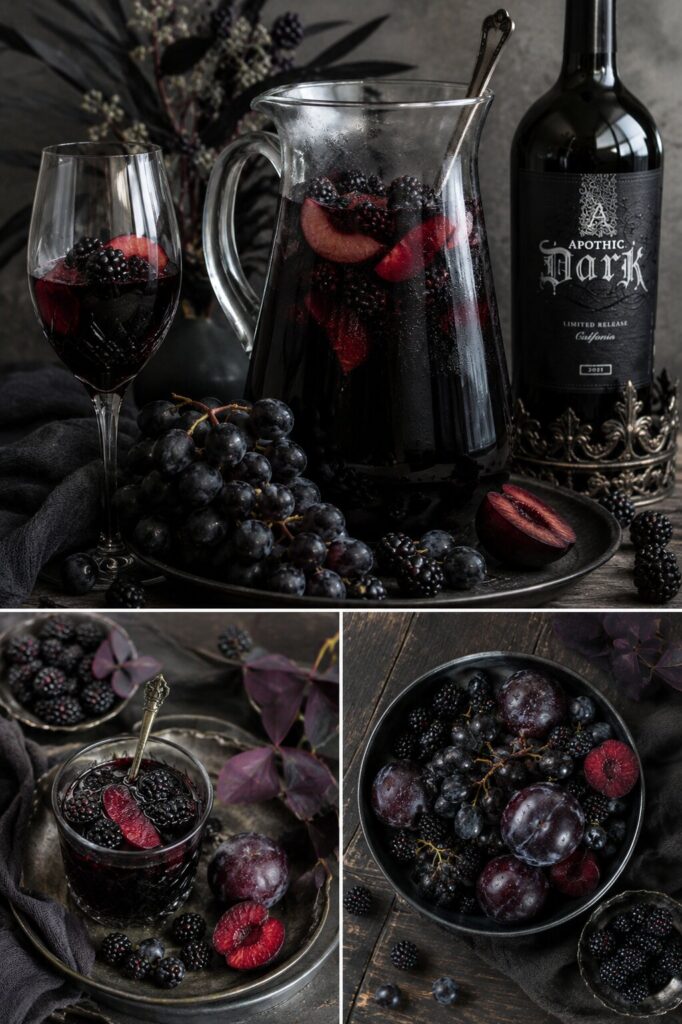
Dark fruit alone, properly macerated, usually gets you 80% of the way to black. That’s worth sitting with for a second — a lot of hosts reach for dye immediately when patience with the fruit would have done most of the work.
If you still need more depth, the toothpick-dip method is the move: dip a toothpick into black food gel, swirl it into the pitcher, taste and look, then repeat only if needed. Pouring gel or liquid drops in freely is how you overshoot straight past black into gray-purple sludge.
- Macerate fruit first and check color before adding anything else
- Use gel or paste coloring, never liquid drops, if correction is needed
- Add color in toothpick-sized increments only
- Consider activated charcoal only after independent research, and only as an option, not a requirement
- Test the color against natural light, not just the fridge bulb
Testing matters because kitchen lighting lies to you. Check the pitcher near a window or under a phone flashlight before deciding you need more dye — you might already be there.
Lighting Photographs and the Gap Between Them
Your black sangria halloween pitcher can look genuinely different depending on what’s lighting the room, and this trips up more hosts than any ingredient mistake.
Warm, yellow party lighting — the kind most living rooms and dining rooms default to — pulls dark liquids toward brown. That inky black you nailed in the kitchen under cool white light can photograph like weak coffee once the candles and string lights come on.
The fix is simple: take your party photos using a flash or a cooler light source, even briefly, rather than relying on ambient mood lighting alone. It’s also why glassware choice matters more than most spooky sangria recipe posts mention.
- Clear stemless glasses show off the black color best
- Dark or frosted glasses hide the effect you worked for
- A quick flash photo reveals true black better than warm ambient light
- Skip floating citrus wheels — they lighten the surface and break the inky look
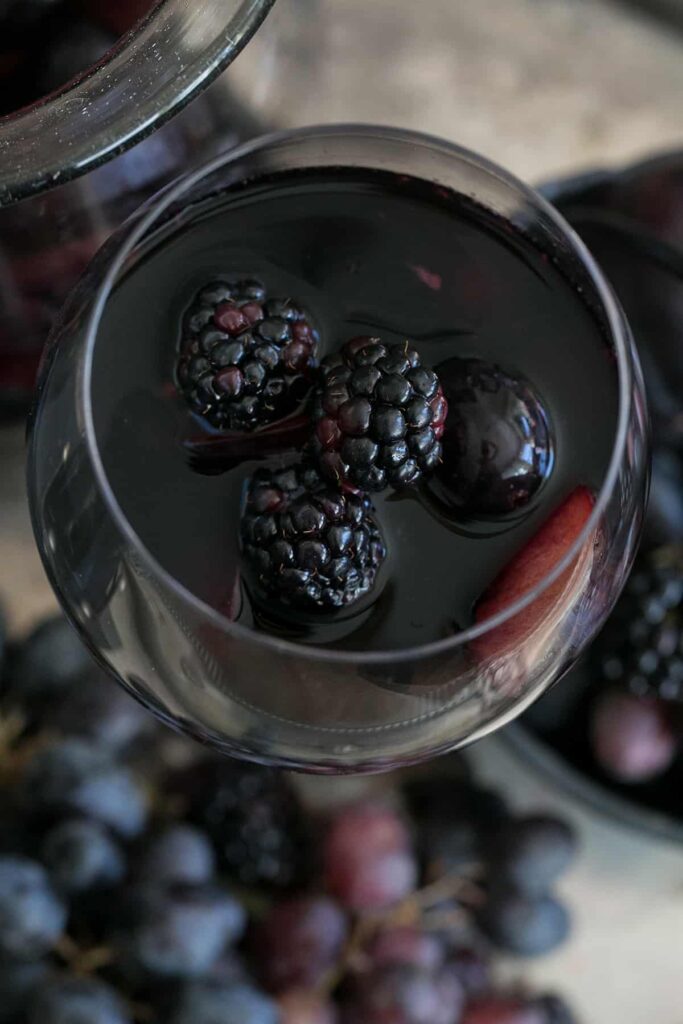
- Halved blackberries, black grapes, or a single dark edible flower read better visually
If you’re already planning the rest of your table styling this season, it’s worth glancing at other festive winter drinks for glassware and presentation ideas that carry over well past Halloween.

A Genuinely Black Non-Alcoholic Version
Mixed parties need a real option here, not a one-line footnote at the bottom of a recipe. This version is just as dramatic in the glass, minus the wine.
Steep black tea strong, then let it cool completely — this becomes your color and tannin base. Combine it with black grape juice concentrate and a dark berry syrup, adjusting sweetness the same way you would with the alcoholic version.
The build order is identical: macerate dark fruit in a bit of the berry syrup first, add the cooled tea and grape juice, correct color with a toothpick-dip of gel if needed, then top with soda water right before serving. It genuinely gets dark enough to sit next to the wine version without looking like the „kid table” drink.
For guests who want something lighter alongside it, a refreshing pink lemonade makes a nice visual and flavor contrast on the same drink table.
Serving Storage and the Small Details
Presentation touches matter here more than in most sangria recipes, because the whole point is visual drama. A black-rimmed sugar or edible black salt rim adds punch-bowl theater without touching the interior liquid’s color.
Storage has a clear rule: sangria without the soda component keeps sealed in the fridge for 2–3 days. Once soda or another topper is mixed in, plan to finish it the same day, since it goes flat and dilutes.
One more note on substitutions — swapping in a dry rosé instead of red wine gives you a deep violet, not true black. It’s a lovely drink, but it’s a different effect, so set that expectation before you shop if black is the actual goal.
If you’re building out a full seasonal drink lineup rather than just one halloween sangria recipe, it’s worth browsing creative Christmas party drinks for ideas on how presentation carries a menu beyond a single showpiece cocktail.
FAQ about black sangria recipe
What wine makes the best black sangria recipe?
A dry red with naturally deep, dense pigment works best — Cabernet Sauvignon or Malbec are common choices. Lighter reds like Pinot Noir fight against the blackening effect and require far more color correction to compensate.
Can I make black sangria ahead of time?
Yes — macerate the fruit and combine it with wine up to 24 hours ahead, then refrigerate. Add the soda or topper only right before serving so the color and fizz stay intact.
Why did my black sangria turn out gray or purple instead of black?
This usually happens when soda is added too early, diluting the pigment, or when liquid food coloring is poured in all at once instead of gel added gradually. Building color in stages — fruit, then wine, then small increments of gel if needed — prevents this.
What’s a good non-alcoholic version of black sangria halloween drinks?
Combine strong cooled black tea, black grape juice concentrate, and a dark berry syrup, using the same maceration and build order as the alcoholic version. It reaches a genuinely dark color and works well served alongside the wine-based pitcher for mixed parties.
How much black sangria should I make for a party of 10?
Plan on close to two bottles of wine, scaled proportionally with liqueur, syrup, and soda, plus extra topper on hand since pitcher drinks tend to get refilled more than expected. Batching by bottle count rather than guest count alone keeps you from running short.
Does glassware really affect how black the sangria looks?
Yes — clear stemless glasses show off the inky color, while dark or frosted glass hides the effect entirely. Combined with cooler lighting for photos, the right glass makes a real difference in how dramatic the drink reads at the party.
A black sangria recipe rewards patience more than any single fancy ingredient. Pick a genuinely dark wine, let dark fruit do the color work first, correct gently if you need to, and hold the soda until the last minute. Do that, and you’ll have a pitcher that looks as dramatic as it tastes — no muddy plum, no last-minute panic, just something people actually ask you to make again next year.
Spooky Black Sangria
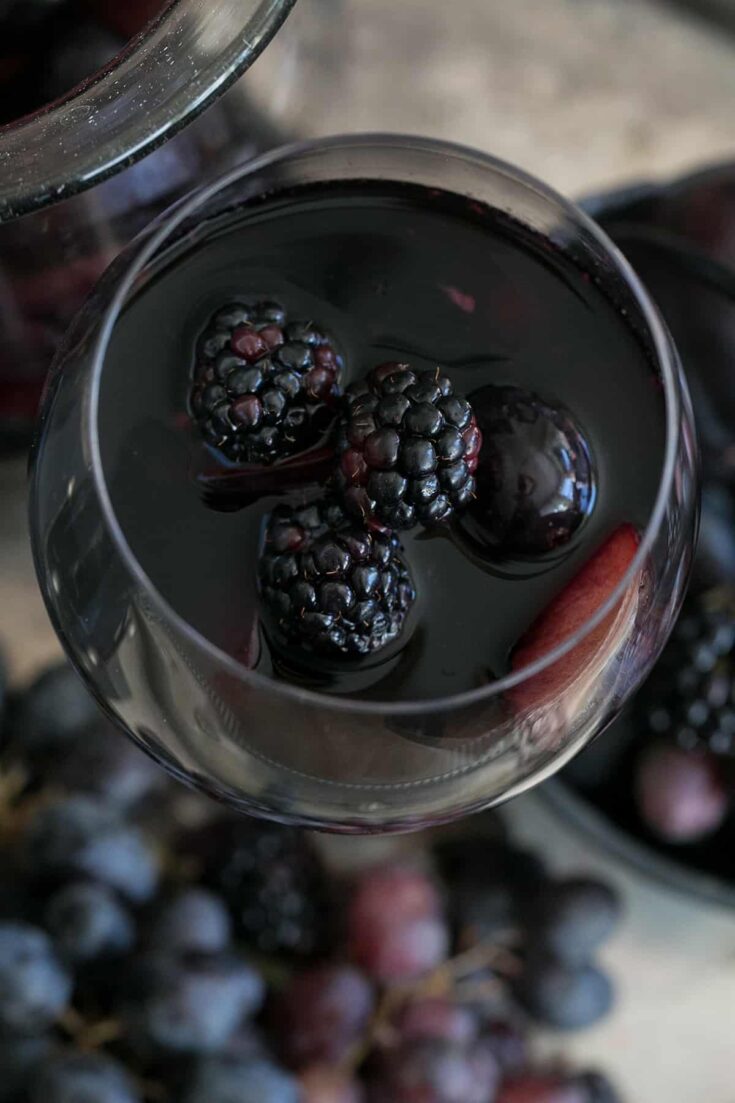
6 servings
Ingredients
- 1 bottle (750 ml) dry red wine
- 1 cup blackberries, plus extra for garnish
- 1 cup black grapes, halved
- 1/2 cup blood orange, sliced into rounds
- 1/2 cup pomegranate juice
- 1/4 cup black sambuca or blackberry liqueur
- 2 tbsp fresh lemon juice
- 1 cup chilled black lemonade or black soda, to top
Instructions
- In a large pitcher, combine the red wine, black sambuca (or blackberry liqueur), pomegranate juice, and fresh lemon juice. Stir gently to combine.
- Add the blackberries, halved black grapes, and blood orange slices directly into the pitcher.
- Cover and refrigerate for at least 30 minutes, up to 2 hours, to let the fruit macerate and deepen the color of the sangria.
- Right before serving, give the sangria a gentle stir.
- Fill glasses with ice.
- Pour the sangria over the ice, dividing the macerated fruit evenly among the glasses.
- Top each glass with a splash of chilled black lemonade or black soda, and garnish with extra blackberries.
Nutrition Information:
Yield:
6Serving Size:
1Amount Per Serving: Calories: 106Total Fat: 1gSaturated Fat: 0gUnsaturated Fat: 1gSodium: 6mgCarbohydrates: 22gFiber: 5gSugar: 11gProtein: 1g